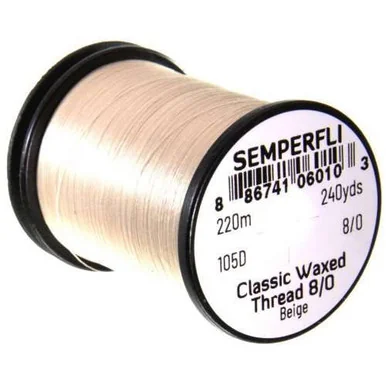
Choose the right thread for your fly
Start with the pattern, hook size and materials you need to secure. Then balance strength, handling and the amount of thread you want to show.
Thread sizes: denier, 8/0, 12/0 and 18/0
Denier measures linear mass: a 1-denier thread weighs one gram per 9,000 metres. It is not a direct measurement of diameter or breaking strain. Fibre type, construction and twist also affect strength and how much space the thread occupies on a hook.
Labels such as 8/0, 12/0 and 18/0 use the traditional aught system. Higher numbers generally indicate finer thread within a particular range, but there is no universal conversion across manufacturers. Two threads labelled 8/0 need not have the same denier, strength or handling. Compare the individual product specifications rather than relying on the size label alone.
Use the existing size categories above to narrow the selection, then check the material and spool details on the product page.
Waxed polyester, GSP, nylon or silk?
Waxed polyester for everyday tying
Lightly waxed polyester gives useful grip when securing materials and is a practical starting point for many trout patterns. Semperfli Classic Waxed Thread 8/0 is one option; select a finer thread when repeated wraps would make the body or head too bulky.
GSP when strength matters
Gel-spun polyethylene offers high strength for its size. Nano Silk is a GSP thread despite its name; it is not natural silk. Use controlled tension, as a strong, fine thread can cut delicate foam or fibres. Follow the manufacturer's bobbin-holder recommendation and keep the tube smooth and free of damage.
Nylon and natural silk
Nylon typically has more stretch than polyester, although handling depends on the particular thread. Natural Semperfli Pure Silk is a different choice for traditional spiders and other heritage patterns where silk forms part of the dressing. Choose according to the pattern rather than assuming the strongest thread is always best.
Match your thread to dry flies, nymphs and streamers
- Small dry flies and emergers: keep tie-in points and heads slim with a fine thread. Use only the wraps needed to secure each material.
- Nymphs and wet flies: choose a thread that controls the body profile and grips the materials securely. Consider its colour if it remains visible or shows through the body when wet.
- Streamers and deer-hair patterns: allow for greater tying tension and bulkier materials. A suitable heavier thread or GSP can help, but use the product's strength guidance and avoid cutting through delicate materials.
Complete the pattern with fly tying materials, or pair your spool with a suitable bobbin holder.
Which fly tying thread should a beginner buy?
Choose one or two patterns first. A manageable waxed polyester thread in the size specified by the pattern is a useful starting point. Black and olive are practical colours for many trout flies, but match your intended dressing. Buy a small selection you will use rather than every colour at once.
Learn how the thread behaves by gradually increasing tension on a bare hook before tying the fly. A finer thread rewards careful handling; stronger thread does not compensate for a rough hook edge or damaged bobbin tube.
Why does my thread break, and can I use floss instead?
When thread breaks
Check for excessive bobbin tension, contact with the hook point, a burr in the bobbin tube or worn thread. Match the thread to the pressure required for the dressing. See our fly tying tools if you need a different bobbin holder or sharp scissors.
Thread versus floss and ribbing
Floss is commonly used to build bodies, while mono ribbing creates segmentation or a translucent rib. Neither should automatically replace the tying thread that secures the dressing. Check the product's intended use, particularly when browsing a category containing several types of spooled material.