- Moderate Weight Brass beads provide moderate weight, which is ideal for creating flies that sink at a controlled rate. This makes them suitable for nymphs, wet flies, and streamers that need to fish at specific depths.
- Flash and Attraction Brass beads often have a shiny surface that reflects light, attracting fish's attention. The flash they emit can mimic the natural iridescence of insect bodies. 3. Buoyancy Control Brass beads offer a balanced level of buoyancy, making them effective for fishing in slower-moving or shallower waters.
- Buoyancy Control Brass beads offer a balanced level of buoyancy, making them effective for fishing in slower-moving or shallower waters.
- Beginner-Friendly For novice fly tiers, brass beads are an excellent starting point due to their ease of use and lower cost.
Fly Tying World · Materials for your next pattern
Brass Fly Tying Beads
Build traditional bead heads, hotspots and shaped heads. Choose your finish, check the stated material and select the size for your hook and pattern.
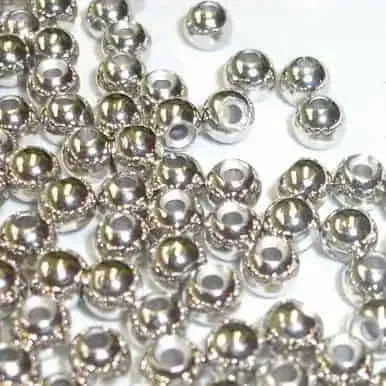
Select a product’s Choose options control to check sizes, stock and price without leaving this listing.
Choose the right bead for your fly
Tungsten or brass?
Tungsten is denser than brass, so a similarly sized bead generally adds more weight. It is useful for river nymphs that need to reach deeper runs or get down quickly in faster water. Brass suits patterns where you want a bead head with less weight, including shallower presentations and many stillwater flies.
Finished bead weight also depends on the alloy, shape and hole size. Change the bead to suit the depth and current, rather than assuming a fixed weight ratio.
How do I choose a bead size?
Start with the fly’s intended profile and the weight you need. A small diameter such as 1.5–2.4 mm can suit a compact nymph, while larger diameters such as 3.2–3.8 mm make a more prominent head. These are examples, not a universal hook-size chart.
Fit depends on hook bend, wire thickness, eye angle and the bead’s hole geometry. Trial-fit the bead on your chosen hook before tying a batch. A bead that passes the bend still needs to sit correctly behind the eye without crowding the hook gape.
Use the product’s actual size selector. Labels such as Small or Medium vary between ranges; where no millimetre measurement is given, do not assume it matches another brand.
Round, slotted or offset beads?
Round countersunk beads have a tapered opening and are widely used for conventional bead-head nymphs. Slotted beads have an enlarged recess that can help them pass around hook bends and sit on angled-eye jig hooks. Offset designs position the weight differently and should be matched to the intended hook.
A slot does not guarantee compatibility with every jig hook. Check the diameter, recess and hook together, especially when changing brands or hook wire thickness.
When should I use coneheads, glass beads or eyes?
Coneheads give streamers, baitfish and salmon patterns a tapered finish and can add weight. Check whether the particular cone is brass or tungsten. Glass beads add colour and translucence to bodies and eyes, with much less weight than comparable metal beads.
Dumbbell eyes can add weight and influence how a streamer rides. Raised 3D eyes add a visual detail to baitfish patterns. Foam booby eyes add buoyancy, so they serve a different purpose from metal eyes.
Continue building your pattern with fly tying materials, hooks and the tungsten bead range.