Fly Tying Dubbing
Build a slim body, a textured thorax or a subtle highlight. Choose dubbing by the finish your fly needs, then check the colour and pack details on the product page.
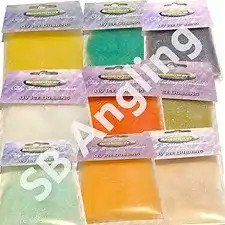
Choose with confidence
What dubbing does
Dubbing is loose fibre worked onto thread or into a loop to build a fly’s body or thorax. The amount, fibre length and tying method determine its profile. Start with less than you think you need: it is easier to add a little more than remove a dense lump from the thread.
Natural or synthetic?
Natural fibres vary in texture and their behaviour in water. Synthetic materials offer different colours, sparkle and consistent fibre forms. A blend combines properties, but neither natural nor synthetic automatically means that a fly will float or sink. Compare the individual material and the whole dressing.
Dry flies, nymphs and wet flies
For a small dry fly, look for a material you can apply sparsely and taper neatly. For a nymph thorax or wet fly, a coarser fibre can provide a more open texture when brushed out. Use reflective fibres sparingly if you want a restrained highlight rather than a conspicuous body.
Fibre length, colour and tools
Shorter fibres are easier to control on a small body. Longer fibres can be trimmed or worked in a loop for a fuller profile. Choose a base colour to suit the pattern and add contrasting or UV fibres only where useful. A dubbing needle or brush helps tease out fibres after winding without adding extra bulk.
Build your pattern with fly tying materials, hooks and tubes and tying threads.